The confusion between licensed and licenced is a common grammar issue in English writing, especially for students, professionals, and content creators.
Many people search this keyword to understand which spelling is correct and whether both forms are valid. The answer depends on British English and American English spelling rules, which often create variations in words like license/licence, organize/organise, and realize/realise.
This topic is important for formal writing, business communication, legal documents, SEO content, and professional certification contexts. Misusing these spellings can make writing look inconsistent or incorrect.
In this article, you will learn the difference between licensed and licenced, their grammar rules, meanings, usage examples, and when to use each form correctly in real-world writing and professional English communication.
Quick Answer
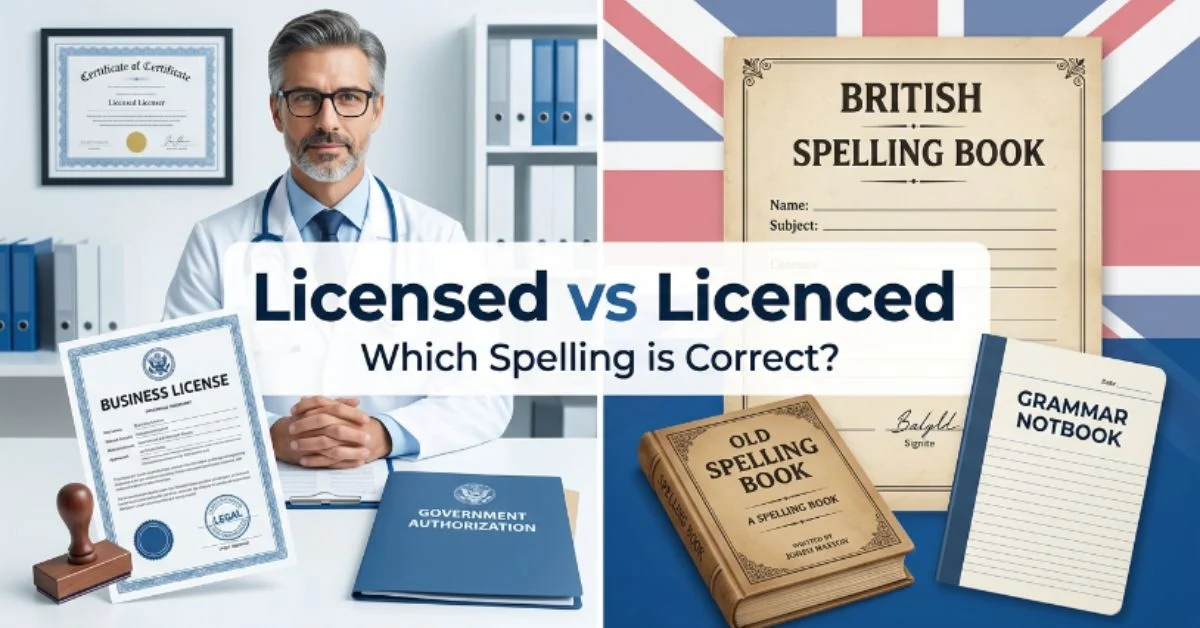
Licensed and licenced mean the same thing, but spelling depends on English variant.
- Licensed → American English (standard global usage)
- Licenced → British English (less common, older form in modern writing)
Meaning
Both words come from license/licence, meaning:
- Authorized
- Certified
- Legally approved
- Permitted by law
Examples
- He is a licensed doctor.
- She works in a licensed clinic.
- The UK spelling licenced is rarely used in modern digital content.
Origin and Meaning of Licensed
The word comes from “license”, which originates from Latin licentia, meaning freedom or permission.
Over time, English developed two forms:
- License (noun + verb in US English)
- Licence (noun in UK English)
From these, the past participle form became:
- Licensed / Licenced → meaning “given official permission”
Meaning in Modern English
- Licensed = officially approved or legally permitted
- Used in:
- Law
- Education
- Healthcare
- Business
- Software licensing (EULA, copyright license)
British vs American English Spelling
This is the main reason for confusion.
Key Rule
- US English → licensed (always S form)
- UK English → licenced (traditional form, less used today)
Comparison Table
| Feature | Licensed | Licenced |
|---|---|---|
| Region | USA, global English | UK (traditional) |
| Usage frequency | Very high | Low |
| Modern writing | Standard | Rare |
| Grammar role | Adjective / verb form | Same |
| Example | Licensed driver | Licenced driver |
Important Note
Even in British English, “licensed” is now commonly accepted, especially in digital content, business writing, and SEO.
Grammar Rules and Word Forms
To understand this confusion, you need to know the word family:
Word Forms
- License (noun/verb US)
- Licence (noun UK)
- Licensed (adjective/past participle)
- Licensing (gerund)
Grammar Structure
- He is a licensed professional
- The company is licensed to operate
- She works in a licensed business
Linguistic Insight
This is a classic case of orthographic variation in English morphology, where spelling changes based on region but meaning stays the same.
Which Spelling Should You Use?
Use “Licensed” if:
- Writing for global audience
- SEO content
- US English
- Business websites
- Software or legal documentation
- Professional resumes
Use “Licenced” if:
- Writing strictly UK academic texts (rare today)
- Following old British style guides
- Required by specific institutional formatting
SEO Recommendation
For modern digital writing:
Always use licensed because it has higher search volume and global acceptance.
Common Mistakes with Licensed vs Licenced
Mistake 1
❌ He is a licenced doctor
✔ He is a licensed doctor
Mistake 2
❌ The company is licenced to sell software
✔ The company is licensed to sell software
Mistake 3
❌ Mixing both spellings in one article
✔ Use one consistent spelling style
Mistake 4
❌ Thinking licenced is incorrect
✔ It is valid in British English but outdated
Licensed in Everyday Examples
Professional Writing
- The hospital is a licensed medical facility
- He is a licensed engineer
- She is a licensed teacher
Emails
- “Please confirm if the software is properly licensed.”
- “We operate a fully licensed business.”
Social Media
- “Proud to be a licensed therapist 💼”
- “Only buy from licensed sellers ✔”
Legal Context
- Licensed contractor
- Licensed distributor
- Licensed operator
- Licensed practitioner
Software Context
- Licensed software
- End-user license agreement (EULA)
- Commercial license compliance
Licensed – Google Trends & Usage Insights
Search Behavior
- “licensed meaning” → high global searches
- “licenced vs licensed” → common grammar confusion
- “is licenced correct” → UK-focused queries
Usage Trends
| Region | Preferred Form |
|---|---|
| USA | Licensed |
| UK | Licensed (modern), Licenced (rare) |
| Global SEO | Licensed |
| Legal documents | Licensed |
Industry Usage
- Healthcare → licensed professionals
- Education → licensed teachers
- Software → licensed applications
- Business → licensed companies
FAQs
Is licensed or licenced correct?
Both are correct, but licensed is more widely used globally.
What is the difference between licensed and licenced?
Only spelling differs based on US and UK English.
Is licenced British English?
Yes, but it is now less common in modern UK writing.
What does licensed mean?
It means officially authorized or legally permitted.
Is licensed a verb or adjective?
It is mainly used as an adjective or past participle.
Should I use licensed in SEO writing?
Yes, because it has higher global search demand.
What is a licensed professional?
A person officially certified to perform a regulated job.
Conclusion
The difference between licensed and licenced is a classic example of British and American English spelling variation. Both forms share the same meaning, officially approved, certified, or legally permitted, but their usage depends on regional writing standards.
In modern English, licensed is the dominant global form, widely used in business, legal documents, SEO content, and professional communication. The spelling licenced still exists in traditional British English but is now rarely used in digital writing.
Understanding this distinction helps improve grammar accuracy, writing consistency, and professional credibility.
Whether you are writing emails, blogs, legal content, or academic work, choosing the correct spelling ensures clarity and stronger communication in global English usage.