Antipasto is the correct spelling. Antipasta is generally a spelling mistake, not the standard Italian term for an appetizer served before the main courses.
The words look similar, and the familiar word pasta can make the second spelling seem correct.
However, antipasto is the standard Italian term for an appetizer served before the main courses, while antipasta is generally a spelling mistake.
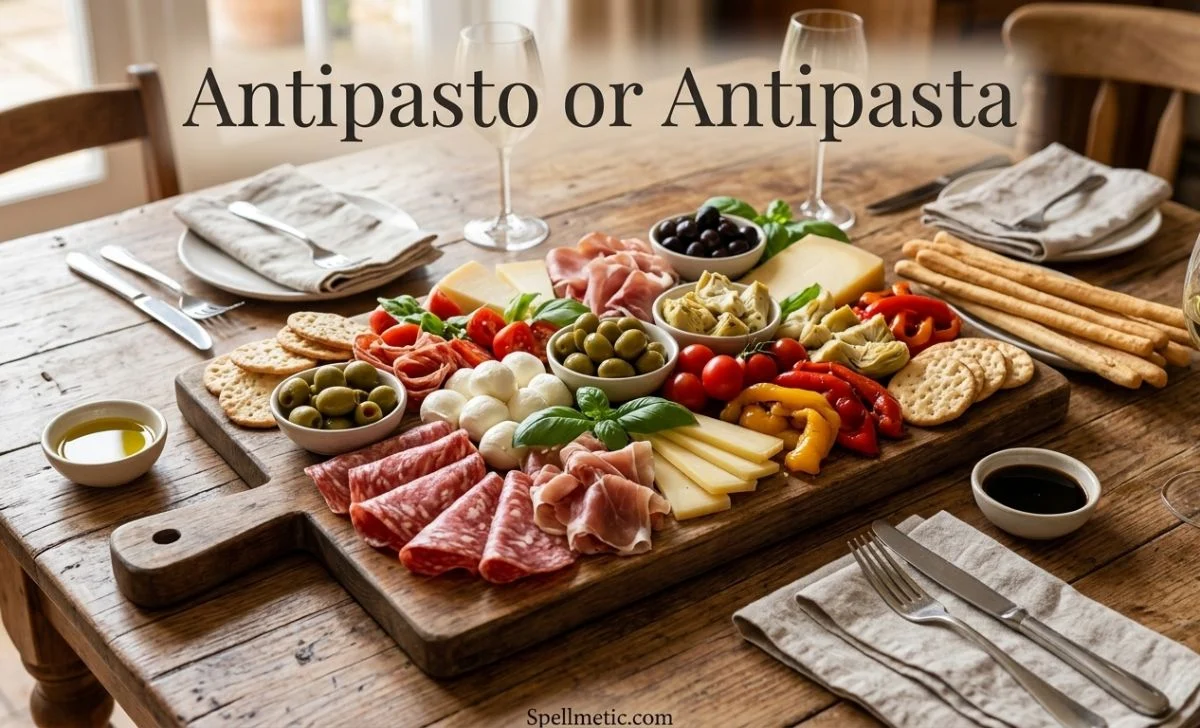
An antipasto selection may include cured meats, cheese, olives, roasted peppers, and marinated vegetables.
It is a traditional part of Italian dining, although ingredients and serving styles vary. The plural form is antipasti, another word that often causes confusion.
Understanding the meaning, pronunciation, and difference between these terms makes it easier to read menus and write about Italian food accurately.
Quick Answer
Antipasto is the correct standard spelling for an Italian appetizer or starter. Antipasta is commonly used by mistake, often because people associate the word with pasta.
Here is the basic difference:
- Antipasto: The singular form for an Italian starter.
- Antipasti: The Italian plural form for multiple starters or appetizers.
- Antipasta: A nonstandard spelling generally treated as an error.
Example: We ordered an antipasto platter with olives, cheese, and salami before dinner.
In English, antipasto can also describe a platter containing several kinds of food, even though the Italian word is singular.
What Does Antipasto Mean in English?
In English, antipasto means an appetizer or starter served before the main courses of a meal, especially in Italian cuisine. It may consist of one dish or a selection of small foods arranged on a platter.
Traditional ingredients include:
- Prosciutto, salami, or other cured meats
- Mozzarella or provolone cheese
- Green and black olives
- Roasted peppers and artichoke hearts
- Pickled vegetables and bruschetta
The selection depends on the region, restaurant, and occasion. Some versions focus on meats and cheese, while others feature vegetables, seafood, or bread.
For example, a family might share an antipasto platter before sitting down to eat pasta and a main dish. At a restaurant, the term may appear in the starters section of the menu.
Antipasto is not the name of one fixed recipe. It describes a style of starter that can contain different ingredients.
What Does Antipasto Mean in Italian?
In Italian, antipasto refers to food served before the later courses of a meal. It traditionally opens an Italian meal and prepares diners for what follows.
The word combines anti- (before) and pasto (meal). Its meaning relates to the timing of the course, not to pasta itself.
A traditional Italian meal may begin with antipasto, followed by a first course such as pasta or risotto. A main dish may come afterward, although the order and number of courses can vary.
Example: The guests enjoyed antipasto before the restaurant served fresh pasta.
Why Is It Called Antipasto?
The name reflects the course’s place at the beginning of a meal. It does not mean “before pasta,” even though antipasto and pasta look alike.
This similarity helps explain why some English speakers write antipasta. The correct term comes from Italian food terminology, rather than from adding a prefix to the English word pasta.
Antipasto or Antipasta Pronunciation
In common English pronunciation, antipasto is often said as an-tih-PAH-stoh. The main stress falls on the “PAH” syllable.
The plural antipasti is commonly pronounced an-tih-PAH-stee in English.
Here is a simple comparison:
| Word | Easy pronunciation guide |
|---|---|
| Antipasto | an-tih-PAH-stoh |
| Antipasti | an-tih-PAH-stee |
| Antipasta | Often said similarly to antipasto, but it is generally a misspelling |
Italian pronunciation may differ slightly from English approximations, especially in vowel sounds. The important spelling point is that the standard singular term ends in -pasto, while its plural ends in -pasti.
Because the terms are similar in sound and appearance, it is easy to remember the wrong spelling after hearing it in conversation.
Antipasto vs Antipasti: What Is the Difference?
Antipasto and antipasti are both correct Italian words. The main difference is number: antipasto is singular, and antipasti is plural.
| Term | Meaning | Example |
|---|---|---|
| Antipasto | One appetizer or starter | We ordered an antipasto. |
| Antipasti | Multiple appetizers or a selection of starters | The antipasti included olives and cheese. |
| Antipasta | Usually a mistaken spelling | The menu lists an antipasto platter. |
In Italian, antipasti refers to appetizers or starter dishes. In English-speaking restaurants, antipasto is also widely used for a platter containing several foods.
For instance, an American restaurant might advertise an “antipasto platter” containing salami, mozzarella, olives, and peppers. This is common English menu usage, even though the platter contains multiple items.
Remember: antipasto is singular, antipasti is plural, and antipasta is generally nonstandard.
Antipasto Examples and Common Ingredients
There is no single recipe for antipasto. Its ingredients depend on local traditions, the season, and the cook’s preferences. The following foods are common choices.
Traditional Antipasto Examples
1. Cured meats
Prosciutto, salami, and mortadella are popular additions. Thin slices are often served with cheese, olives, or bread.
2. Italian cheeses
Mozzarella and provolone are familiar options. Fresh and aged cheeses provide different textures and flavors.
3. Olives and marinated vegetables
Green olives, black olives, roasted peppers, artichoke hearts, and pickled vegetables bring salty, savory, or tangy flavors to the platter.
4. Bruschetta
This toasted bread is often topped with tomatoes, olive oil, garlic, or other savory ingredients. It may accompany antipasto or appear as a starter on its own.
5. Seafood
Some menus feature marinated seafood or other seafood starters. The choices vary with regional cooking traditions and restaurant style.
Antipasto in a Sentence
These examples show how the word appears in everyday English.
- We shared an antipasto platter before ordering our main dishes.
- The restaurant served olives, roasted peppers, and salami as antipasto.
- She prepared antipasti for the family gathering.
- The menu offers an antipasto selection with fresh mozzarella.
- Our meal began with antipasto before the pasta course.
- The chef added marinated artichokes to the antipasto platter.
These sentences illustrate both the traditional starter and the common English use of antipasto for a mixed platter.
More examples: The waiter brought an antipasto platter to our table first. We ordered antipasto with bread, cheese, and olives. The family enjoyed a simple antipasto before the main course.
Antipasto vs Charcuterie: What Is the Difference?
Antipasto and charcuterie can look similar because both may feature cured meats, cheese, and other small foods. However, the terms have different traditional meanings.
Antipasto is an Italian starter course. It can include cured meats, cheese, olives, vegetables, seafood, and bread.
Charcuterie traditionally focuses on prepared or preserved meats, including salami, ham, and pâté. Modern charcuterie boards may also contain cheese, crackers, fruit, nuts, and other accompaniments.
The two categories can overlap. An antipasto platter may contain charcuterie, and a charcuterie board may include foods often served as antipasto.
The main distinction is the culinary context: antipasto describes a type of Italian starter, while charcuterie traditionally centers on prepared meats and related foods.
What Is Antipasto Salad?
Antipasto salad is a salad inspired by the ingredients found on an antipasto platter. It often combines greens with cured meats, cheese, olives, tomatoes, and marinated vegetables.
Common ingredients include:
- Salami or prosciutto
- Mozzarella or provolone
- Olives and pepperoncini
- Tomatoes and red onion
- Artichoke hearts
- Italian-style dressing
Recipes vary, so not every salad contains all these ingredients. Some versions are served as a side dish, while larger portions can make a substantial meal.
Although antipasto salad takes its name from the Italian starter, it is not always served as a separate first course. In many American restaurants, it appears as a regular salad option.
The name describes the ingredients and style rather than one fixed recipe.
Is Antipasti an Appetizer?
Yes. Antipasti is the Italian plural of antipasto and refers to appetizers or starter dishes served before later courses.
An antipasti selection might include several small dishes, such as cured meats, cheese, olives, marinated vegetables, and bruschetta. The combination depends on the meal and regional tradition.
On a restaurant menu, antipasti usually identifies a section featuring starters or small dishes. By comparison, antipasto may refer to one starter or to a mixed platter in English usage.
For example, a menu might list marinated olives and bruschetta under antipasti, while a shared platter is labeled antipasto.
Common Antipasto Spelling Mistakes
The words antipasto, antipasti, and antipasta are easy to mix up, but each deserves a closer look.
Writing antipasta instead of antipasto: The familiar word pasta can influence the spelling. For an Italian appetizer, write antipasto.
Using antipasti for one item in Italian: Antipasti is plural. However, English menus sometimes use the singular antipasto to name a platter with several ingredients.
Assuming antipasto contains pasta: Traditional antipasto is a starter course. Pasta is generally served as a separate course in a traditional Italian meal.
Treating antipasto and charcuterie as identical: Both may contain cured meats and cheese, but antipasto refers to an Italian starter, whereas charcuterie traditionally focuses on prepared meats.
A simple memory tip is to connect antipasto with the start of a meal and antipasti with multiple starters. This helps distinguish the correct spelling from antipasta.
FAQs
1. Is it antipasto or antipasta?
Antipasto is the standard spelling for an Italian appetizer. Antipasta is generally a spelling mistake influenced by the word pasta.
2. What does antipasto mean in English?
It means an appetizer or starter served before the main courses, especially in Italian cuisine. It can refer to a dish or a platter of small foods.
3. How do you pronounce antipasto?
A common English pronunciation is an-tih-PAH-stoh, with the main stress on the “PAH” syllable.
4. Why is it called antipasto?
The word refers to food served before the later courses of a meal. It does not specifically mean food served before pasta.
5. What is the plural of antipasto?
The Italian plural is antipasti. It refers to multiple appetizers or a selection of starter dishes.
6. What foods are included in antipasto?
Common choices include cured meats, cheese, olives, roasted peppers, marinated vegetables, artichoke hearts, and bruschetta. Ingredients vary by recipe and region.
7. Is antipasto the same as charcuterie?
No. Antipasto is an Italian starter course, while charcuterie traditionally focuses on prepared meats. Their ingredients can overlap.
8. What is antipasto salad?
It is a salad inspired by antipasto ingredients, often containing greens, cured meat, cheese, olives, tomatoes, and marinated vegetables.
9. Is antipasti an appetizer?
Yes. Antipasti is the plural form of antipasto and refers to appetizers or starter dishes served before later courses.
10. Is antipasto made with pasta?
Usually not. Traditional antipasto features foods such as cured meats, cheese, olives, vegetables, and other small starters. Pasta is generally served as a separate course.
Conclusion
When choosing between antipasto or antipasta, antipasto is the standard spelling for an Italian appetizer served before the main courses.
The plural form is antipasti, which appears on menus offering several starters or a selection of small dishes.
Although antipasta is understandable as a spelling confusion, it is not the standard Italian term. Antipasto may include cured meats, cheese, olives, vegetables, or bruschetta, and its ingredients vary by region and restaurant.
Remembering the distinction between antipasto and antipasti makes it easier to understand Italian menus and write about Italian food accurately.