Lessor and lessee are easy to confuse because they look almost the same. Both words appear in lease agreements, rental contracts, car leases, business documents, and legal writing. The difference, however, is simple once you know which side of the lease each word describes.
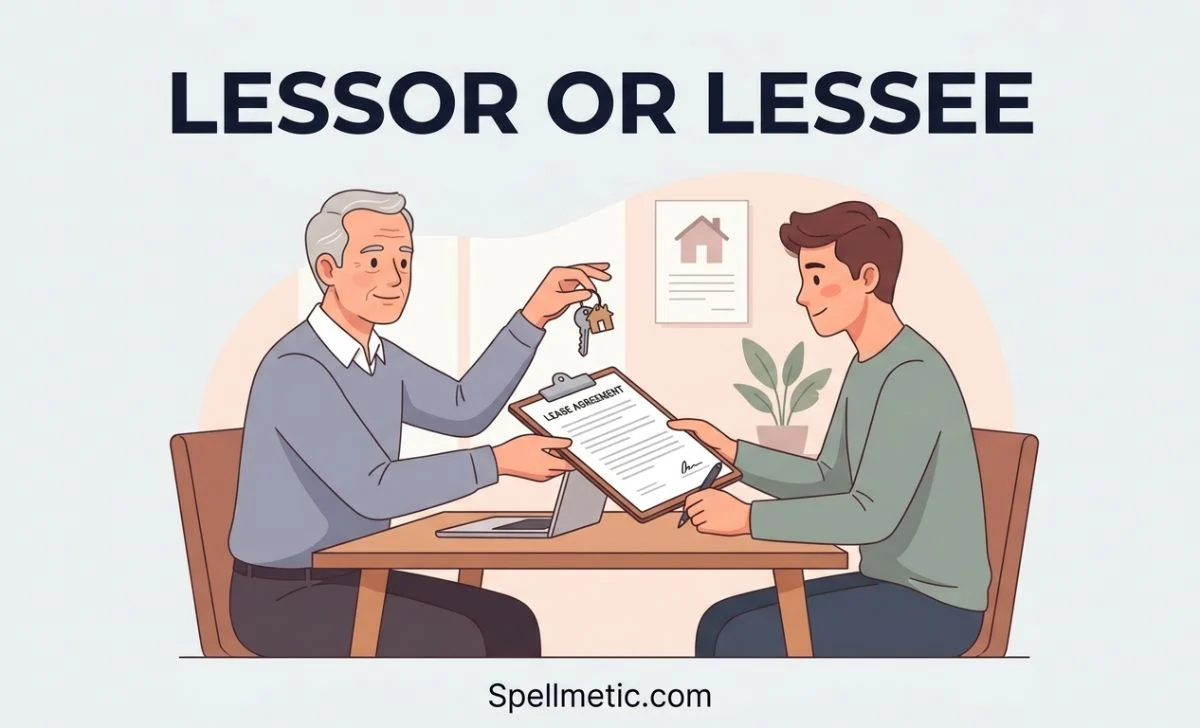
The lessor is the party that grants someone the right to use an asset under a lease. The lessee is the party that receives that right and uses the asset according to the agreement. In a typical apartment rental, the landlord is the lessor and the tenant is the lessee.
These terms can apply to more than houses and apartments. A lease may involve commercial property, vehicles, equipment, machinery, or other property. The exact rights and responsibilities depend on the lease agreement and the law that applies to it.
Quick Answer
The easiest way to remember the difference is:
| Term | Meaning | Common example |
|---|---|---|
| Lessor | The party that grants the right to use an asset | Landlord |
| Lessee | The party that receives the right to use the asset | Tenant |
So, if you rent or lease something from someone, you are usually the lessee. The person or organization granting you that right is the lessor.
For example, if Maria rents an apartment from James, James is the lessor and Maria is the lessee.
The same relationship can apply to a business leasing an office, a driver leasing a vehicle, or a company renting equipment.
What Does Lessor Mean?
A lessor is a person or organization that grants another party the right to use property or an asset under a lease.
In everyday property rentals, the lessor is commonly the landlord or property owner. In other situations, the lessor may be a company that leases vehicles, equipment, or other assets. Cambridge defines a lessor as someone who allows another person or organization to use something they own under a lease.
For example:
The lessor agreed to repair the damaged roof under the terms of the lease.
The lessor may receive rent or other lease payments from the lessee. However, the exact payment, maintenance, insurance, and other responsibilities depend on the contract.
It is also useful to remember that lessor does not simply mean “owner” in every possible leasing situation.
The more precise idea is the party that grants the right to possession or use under the lease. U.S. commercial leasing law, for example, defines a lessor as the person who transfers the right to possession and use of goods under a lease.
What Does Lessee Mean?
Bilkul. Yahan “the lessee is…” wali structure baar-baar aa rahi hai, jis se writing formulaic aur AI-like lag sakti hai. Is paragraph ko zyada natural bana dete hain:
A lessee is the person or organization that receives the right to use an asset through a lease.
In a home rental, this role is normally held by the tenant, while a business leasing office space takes the same role in a commercial agreement.
For a vehicle lease, the customer or business using the car is the lessee.
Is version mein “the lessee” ki repetition kam hai aur examples bhi naturally flow karte hain.
Cambridge defines a lessee as a person who has the right to use something such as land, a building, or equipment under a lease.
For example:
The lessee must make the monthly payment by the date stated in the agreement.
The lessee normally agrees to follow the conditions of the lease, such as payment requirements, permitted use, maintenance rules, and the date on which the lease ends.
Lessor vs. Lessee: What Is the Difference?
The main difference is who grants the lease and who receives the right to use the asset.
| Lessor | Lessee |
|---|---|
| Grants the lease | Receives the lease |
| Gives another party the right to use an asset | Uses the asset under the agreement |
| Usually receives lease payments | Usually makes lease payments |
| Commonly the landlord in a property rental | Commonly the tenant |
| May be an individual or organization | May be an individual or organization |
A lease creates a relationship between these two parties. The lessor grants the agreed rights, while the lessee receives and exercises those rights subject to the contract.
A lease can cover real estate, such as an apartment or office, or personal property, such as a vehicle or piece of equipment.
A simple way to remember it
Think of the words as two sides of the same agreement:
Lessor → lets the asset
Lessee → uses the asset
This is only a memory aid, but it makes the distinction much easier to recall.
Is a Tenant a Lessor or Lessee?
A tenant is generally the lessee.
If you rent an apartment or house from a landlord, you are the person receiving the right to occupy and use the property. That makes you the lessee.
The landlord is generally the lessor.
For example:
Sarah rents an apartment from Greenview Properties.
In this situation:
- Greenview Properties = lessor
- Sarah = lessee
- Apartment = leased property
- Monthly rent = lease payment
- Rental contract = lease agreement
This landlord-tenant relationship is a common example of the lessor-lessee relationship.
Lessor and Lessee in a Lease Agreement
A lease agreement sets out the terms under which the lessee can use the property or asset.
Depending on the type of lease, it may include:
- Names of the lessor and lessee
- Description of the property or asset
- Length of the lease
- Rent or other payments
- Payment dates
- Security deposit
- Maintenance responsibilities
- Insurance requirements
- Permitted uses
- Renewal terms
- Termination conditions
- Notice requirements
- Rules concerning damage or alterations
The lease agreement is important because the parties’ responsibilities are not identical in every situation. Maintenance, payment terms, termination rights, and other duties can vary according to the contract and applicable law.
For that reason, it is better to say that a lessor or lessee may have a particular responsibility rather than assuming every lease uses exactly the same rules.
Lessor and Lessee Examples
Apartment Lease
John owns an apartment and rents it to Emily.
John is the lessor, while Emily is the lessee.
Emily pays rent and has the right to live in the apartment for the agreed lease term.
Commercial Lease
A company rents an office from a property management company.
The property company is the lessor.
The business renting the office is the lessee.
The lease may specify rent, permitted business activities, maintenance, insurance, renewal options, and other conditions.
Equipment Lease
A construction company leases a machine from an equipment provider.
The equipment provider is the lessor.
The construction company is the lessee.
The company can use the equipment according to the lease while making the required payments.
Land Lease
A business leases a parcel of land for a specific purpose.
The party granting the right to use the land is the lessor.
The business receiving that right is the lessee.
These examples show why the terms are broader than simply “landlord” and “tenant.”
Lessor vs. Lessee in a Car Lease
The same distinction applies when you lease a vehicle.
Suppose a customer signs a vehicle lease with a leasing company. The party providing the contractual right to use the vehicle is the lessor, while the customer receiving that right is the lessee.
The agreement may cover:
- Monthly lease payments
- Lease length
- Mileage limits
- Insurance
- Vehicle maintenance
- Wear and tear
- Early termination
- End-of-lease return
- Purchase options, when available
The exact arrangement depends on the contract. In some regulated vehicle-leasing contexts, the legal definitions specifically describe the lessor as the party granting use and the lessee as the party obtaining use.
So, when you see “lessee vs. lessor car”, think about the two sides of the vehicle lease rather than simply the words “buyer” and “seller.” A lease is not the same as a purchase.
Is It “Leasee” or “Lessee”?
Lessee is the correct standard spelling.
Leasee is a common misspelling because the word is associated with lease. However, formal writing should use lessee.
Correct:
The lessee signed the lease agreement.
Incorrect:
The leasee signed the lease agreement.
The spelling lessee is also the form used by dictionaries and legal sources.
A useful way to avoid the mistake is to remember the pair:
lessor ↔ lessee
They are the two established terms used for the parties in a lease.
How Do You Pronounce Lessor and Lessee?
The two words have different endings, so their pronunciation is not identical.
Lessor: roughly LESS-or
Lessee: roughly less-EE
The final sound in lessee is especially important because it ends with a long ee sound. Cambridge gives the pronunciation of lessee as /lesˈiː/.
When speaking about a rental contract, you may hear:
“The lessor receives the payment.”
and:
“The lessee occupies the property.”
What Is the Plural of Lessee?
The plural of lessee is lessees.
For example:
Several lessees signed the new rental agreements.
The plural of lessor is lessors.
So the forms are:
- One lessor → several lessors
- One lessee → several lessees
Dictionary sources also list lessees as the plural form.
Can Lessor and Lessee Be Used Interchangeably?
No. Lessor and lessee are not interchangeable.
Using the wrong word can reverse the meaning of a sentence.
Compare:
The lessor receives the monthly lease payment.
The party receiving the payment is the lessor.
The lessee makes the monthly lease payment.
The party making the payment is the lessee.
The distinction becomes particularly important in contracts because these terms identify the parties’ different positions under the lease.
Lessor and Lessee Rights and Responsibilities
The exact responsibilities of each party depend on the type of lease, its written terms, and applicable law.
Generally, the lessor may have responsibilities connected with providing the leased property or asset and fulfilling obligations assigned to the lessor by the agreement.
The lessee may be responsible for paying rent or other charges, using the asset as permitted, taking reasonable care of it, and following the conditions of the lease.
For example, a residential lease might assign certain repair duties to the landlord while requiring the tenant to report damage promptly. A commercial equipment lease may place different maintenance or insurance obligations on the business using the equipment.
This is why the actual lease agreement matters more than assuming that every lessor or lessee has exactly the same duties. Lease rights and obligations can vary by contract and jurisdiction.
Lessor or Lessee: How to Remember the Difference
If you keep mixing up the two words, use this simple rule:
The lessor gives the right to use.
The lessee gets the right to use.
For a typical home rental:
Landlord → lessor
Tenant → lessee
For a car lease:
Leasing party → lessor
Customer using the vehicle → lessee
For equipment:
Equipment provider → lessor
Business using the equipment → lessee
Once you remember who grants the lease and who receives it, the two terms become much easier to distinguish.
FAQs
1. Is a tenant a lessor or lessee?
A tenant is generally the lessee because the tenant receives the right to use and occupy the property under a lease.
2. Is a landlord a lessor or lessee?
A landlord is generally the lessor because the landlord grants the tenant the right to use the property.
3. What is the difference between a lessor and a lessee?
The lessor grants the right to use an asset, while the lessee receives that right under a lease.
4. Is “leasee” or “lessee” correct?
Lessee is the correct standard spelling. Leasee is a common misspelling.
5. Who pays rent, the lessor or lessee?
The lessee usually pays rent or other agreed lease payments, while the lessor usually receives them. The exact payment terms are set out in the lease.
6. Who receives rent, the lessor or lessee?
The lessor generally receives the rent from the lessee.
7. What is the plural of lessee?
The plural of lessee is lessees.
8. Who is the lessor in a car lease?
The lessor is the party that grants the contractual right to use the vehicle. The customer or business receiving that right is generally the lessee.
Conclusion
Lessor and lessee describe opposite sides of a lease. The lessor grants the right to use property or another asset, while the lessee receives that right and follows the terms of the lease.
In everyday housing situations, the distinction is usually simple: landlord = lessor and tenant = lessee. The same relationship can apply to offices, vehicles, equipment, and other leased assets.
Remember one key point: lessee is the correct spelling, not leasee. Once you connect lessor with granting the lease and lessee with receiving the lease, the difference becomes much easier to remember and use correctly.