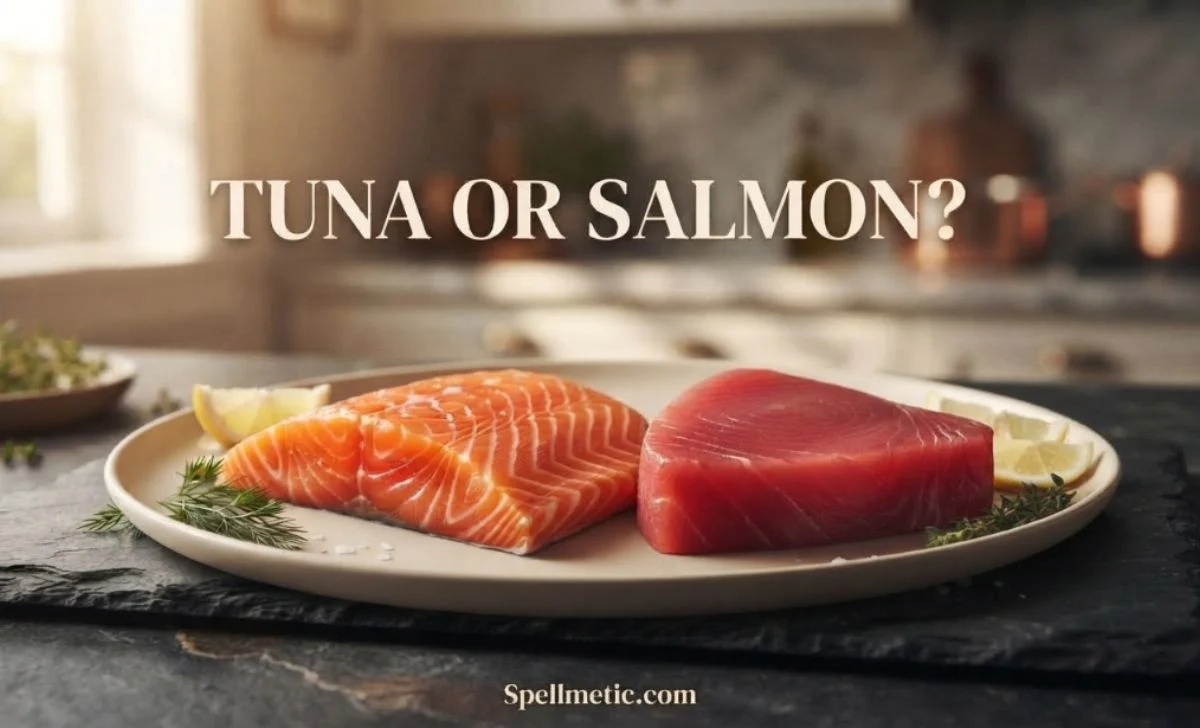
Choosing between tuna and salmon depends on what you want from your meal. Both are excellent sources of protein, but they are not nutritionally identical.
Tuna is usually the leaner choice, with plenty of protein and fewer calories in many varieties. Salmon contains more fat, but much of that fat comes from beneficial omega-3 fatty acids. Salmon is also a strong source of vitamin D and is generally a lower-mercury choice.
So, there is no single winner for everyone. If you want lean protein or a lower-calorie meal, tuna may suit you better. If omega-3s, vitamin D, and a richer flavor matter more, salmon has the edge.
Quick Answer
Salmon is the better overall choice for omega-3s, vitamin D, and lower mercury, while tuna is often better for lean protein, fewer calories, and affordability.
For example, someone preparing a high-protein lunch may choose canned tuna with vegetables, while someone looking for an omega-3-rich dinner may choose baked salmon with rice and vegetables.
The type of tuna matters, too. Canned light tuna is a different choice from albacore or bigeye tuna when mercury is considered.
The FDA lists salmon and canned light tuna as “Best Choices,” while albacore and yellowfin tuna are “Good Choices”; bigeye tuna is in the “Choice to Avoid” category because of its higher mercury level.
Tuna vs Salmon at a Glance
| Category | Tuna | Salmon |
|---|---|---|
| Protein | High | High |
| Calories | Usually lower | Usually higher |
| Fat | Usually lower | Higher |
| Omega-3 | Varies by species | Generally high |
| Vitamin D | Lower in many varieties | Generally higher |
| Mercury | Depends heavily on species | Generally low |
| Taste | Mild, meaty | Rich, buttery |
| Texture | Firm | Tender |
| Price | Often cheaper, especially canned | Often more expensive |
| Weight loss | Strong option | Can still fit well |
| Convenience | Excellent canned options | Fresh and canned options |
The exact nutrition depends on the species, serving size, and whether the fish is fresh, frozen, or canned.
That is why a simple “tuna always has more protein” or “salmon always has more calories” rule can be misleading.
Tuna vs Salmon Nutrition
Tuna and salmon both provide high-quality protein and useful vitamins and minerals. The biggest nutritional difference is their fat profile.
Tuna is often much leaner, especially when you compare lean tuna varieties with salmon. Salmon has more total fat, but that is not necessarily a disadvantage because fatty fish are important dietary sources of EPA and DHA omega-3 fatty acids.
The American Heart Association recommends eating fish at least twice a week, particularly fatty fish such as salmon.
Is Tuna or Salmon Higher in Protein?
Both are protein-rich foods, and tuna often has a slight advantage when comparing lean varieties on an equal-weight basis.
That makes tuna popular with people who want a filling meal without adding much fat. A simple tuna salad, for example, can provide substantial protein without the richness of salmon.
However, the difference is not large enough to make salmon a poor protein source. Salmon still provides plenty of protein along with its healthy fats.
Is Tuna or Salmon Higher in Calories?
Tuna is usually lower in calories than salmon, particularly when comparing lean tuna with a fatty salmon variety.
Salmon contains more fat, so its calorie content is usually higher. But those additional calories come with nutrients that tuna may provide in smaller amounts, especially omega-3 fats and vitamin D.
So, higher calories do not automatically mean salmon is less healthy.
Which Has More Omega-3: Tuna or Salmon?
Salmon generally has the advantage for omega-3 fatty acids.
EPA and DHA are the main long-chain omega-3 fats found in seafood. Fatty fish such as salmon are particularly rich sources, which is one reason health organizations encourage regular fish consumption.
Some tuna varieties also provide meaningful omega-3s. The amount varies by species, so “tuna” should not be treated as one nutritionally identical food.
What Vitamins and Minerals Do They Provide?
Both fish provide useful nutrients such as:
- Protein
- Vitamin B12
- Selenium
- Vitamin D
- Niacin
- Healthy fats
Salmon tends to stand out for vitamin D and omega-3 fats, while tuna is particularly useful as a lean protein source.
Fish also provides nutrients beyond protein and fat. The FDA notes that seafood can provide protein, omega-3s, vitamin B12, vitamin D, selenium, iron, iodine, and other nutrients.
Tuna or Salmon for Weight Loss?
Tuna is usually the easier choice for a lower-calorie, high-protein meal.
Its lean profile makes it convenient when you’re trying to keep calories under control while still getting enough protein. Canned tuna can also be mixed with vegetables, beans, or a small amount of dressing for a quick lunch.
Salmon can absolutely fit into a weight-loss diet, too. Its higher calorie content does not make it a “bad” food. The portion and cooking method matter.
For example:
Lower-calorie meal: tuna + cucumber + tomatoes + leafy greens
More calorie-dense meal: salmon + rice + avocado + olive-oil dressing
Both can be nutritious. The better choice depends on the rest of the meal and your overall calorie intake.
Which Is Better for Muscle Building?
Tuna has an advantage when your priority is lean protein with fewer calories.
A person trying to increase protein while controlling total calories may find tuna especially convenient. It works well in sandwiches, salads, wraps, rice bowls, and meal-prep containers.
Salmon is still an excellent option because it combines protein with omega-3 fats and other nutrients.
In other words, you do not need to choose tuna every time you want protein. Rotating tuna, salmon, and other seafood can give your diet more variety.
Which Has More Mercury: Tuna or Salmon?
This is one area where the type of tuna makes a major difference.
Salmon is generally a low-mercury choice. Tuna varies considerably by species.
The FDA’s current fish advice places:
- Salmon — Best Choice
- Canned light tuna, including skipjack — Best Choice
- Albacore or white tuna — Good Choice
- Yellowfin tuna — Good Choice
- Bigeye tuna — Choice to Avoid
This is why saying simply “tuna has high mercury” is inaccurate. A can of light tuna and a large bigeye tuna steak are not equivalent from a mercury perspective.
The FDA explains that larger, longer-living predatory fish tend to accumulate more methylmercury. It also recommends choosing a variety of lower-mercury fish rather than eating the same type every time.
Canned Light Tuna vs Albacore Tuna
This distinction is particularly useful for regular tuna eaters.
Canned light tuna generally uses smaller tuna species, often skipjack. Albacore, also called white tuna, is a larger fish and typically contains more mercury.
According to the FDA, albacore tuna typically contains about three times more mercury than canned light tuna.
So if tuna is a regular part of your diet, checking the type on the label is worthwhile.
Tuna vs Salmon: Taste and Texture
The difference is easy to notice once you try both.
What Does Tuna Taste Like?
Tuna is generally:
- Mild
- Meaty
- Firm
- Less buttery
- Relatively lean
Fresh tuna works especially well when seared, grilled, or used in sushi and sashimi where the quality of the fish matters.
Canned tuna has a different texture and flavor. It is softer and works well in salads, sandwiches, wraps, and pasta.
What Does Salmon Taste Like?
Salmon is usually:
- Richer
- Buttery
- Tender
- More oily
- More pronounced in flavor
Baked salmon with lemon, herbs, and vegetables is a simple example of how its natural richness can become the main feature of a meal.
Which Tastes Better?
There is no objective winner.
If you prefer mild, firm, meaty fish, tuna may be your favorite.
If you prefer rich, buttery, tender fish, salmon is more likely to appeal to you.
Cooking method also changes the experience. A seared tuna steak and canned tuna should not be expected to taste the same.
Canned Tuna or Salmon: Which Is Better?
For convenience and budget, canned tuna often wins.
It is inexpensive, easy to store, and requires little preparation. You can turn it into a sandwich or salad in minutes.
Canned salmon is also useful and provides the nutritional benefits associated with salmon, including omega-3 fats. It can work well in salmon cakes, salads, sandwiches, and rice bowls.
| Feature | Canned Tuna | Canned Salmon |
|---|---|---|
| Protein | High | High |
| Calories | Often lower | Often higher |
| Omega-3 | Varies | Generally higher |
| Convenience | Excellent | Excellent |
| Flavor | Mild | Richer |
| Budget | Often cheaper | Often costs more |
| Mercury | Depends on tuna type | Generally low |
One thing to check is sodium. Different canned products can contain very different amounts, so reading the nutrition label is more useful than assuming every can is nutritionally identical.
Which Is More Expensive: Tuna or Salmon?
Salmon is often more expensive than ordinary canned tuna, but there is no universal price difference.
The final cost depends on:
- Fresh vs canned
- Wild-caught vs farmed
- Species
- Brand
- Location
- Quality
- Season
- Packaging
Premium tuna can be extremely expensive, particularly certain fresh varieties used for sushi and sashimi.
So if you’re comparing a standard can of light tuna with a fresh salmon fillet, tuna will usually be the budget-friendly option. But comparing premium fresh tuna with farmed salmon can produce a very different result.
Tuna or Salmon: Which Is Better for Different Goals?
Instead of asking which fish is universally better, match the fish to your goal.
Choose Tuna If You Want:
- Lean protein
- Fewer calories
- A mild flavor
- Easy meal prep
- A budget-friendly option
- A convenient sandwich or salad ingredient
Choose Salmon If You Want:
- More omega-3 fats
- A richer flavor
- More dietary fat
- A strong source of vitamin D
- A lower-mercury seafood option
- A fatty fish for regular meals
The American Heart Association recommends two servings of fish per week, particularly fatty fish, as part of a heart-healthy eating pattern.
Is Tuna or Salmon Healthier?
Neither is automatically healthier in every situation.
Salmon has a strong advantage for omega-3 fats and is a lower-mercury choice. Tuna can be the better fit when you want a lean, protein-rich food with fewer calories.
The best choice also depends on the specific product. Canned light tuna is different from albacore tuna, just as wild salmon and farmed salmon can differ in nutrition, price, and environmental considerations.
A varied seafood diet is often more useful than eating the same fish repeatedly. FDA guidance also emphasizes choosing a variety of fish from lower-mercury options.
Can You Eat Tuna and Salmon Every Week?
Yes, both can fit into a balanced diet, but variety matters.
The American Heart Association recommends eating fish at least twice a week, with particular emphasis on fatty fish.
For tuna, pay attention to the species because mercury levels vary. Canned light tuna is categorized differently from albacore and bigeye tuna by the FDA.
For someone who eats seafood regularly, rotating salmon, canned light tuna, sardines, trout, and other lower-mercury choices can make meals more varied while helping manage mercury exposure.
FAQs
1. Is tuna or salmon healthier?
Salmon has an advantage for omega-3 fats, vitamin D, and lower mercury, while tuna is often leaner and lower in calories. Both can be healthy choices.
2. Which has more protein, tuna or salmon?
Tuna is often slightly higher in protein when comparing similar portions, especially lean tuna varieties. Salmon is also an excellent source of high-quality protein.
3. Is tuna or salmon higher in calories?
Salmon is generally higher in calories because it contains more fat. Tuna is usually the leaner option.
4. Which has more omega-3, tuna or salmon?
Salmon generally contains more omega-3 fatty acids than many common tuna varieties. Some tuna, particularly certain fatty species, can also provide substantial omega-3s.
5. Is tuna or salmon better for weight loss?
Tuna often has the advantage because it provides plenty of protein with relatively few calories. Salmon can still be part of a weight-loss diet when portions and total calories are appropriate.
6. Which is more expensive, tuna or salmon?
Standard canned tuna is usually cheaper than fresh salmon. However, premium tuna varieties can cost much more, so the format and species matter.
7. Which tastes better, tuna or salmon?
Tuna is generally milder and meatier, while salmon is richer and more buttery. The better taste is a matter of personal preference.
8. Is canned tuna or salmon better?
Canned tuna is usually better for affordability and lean protein. Canned salmon is attractive if you want more omega-3 fats and a richer flavor.
9. Which has more mercury, tuna or salmon?
Tuna can have more mercury, but it depends on the species. Salmon is classified by the FDA as a “Best Choice,” while bigeye tuna is in the highest-mercury “Choice to Avoid” category.
10. Can you eat tuna and salmon every week?
Both can be included in a balanced diet. The FDA and AHA encourage seafood consumption while emphasizing variety and choosing lower-mercury fish.
Conclusion
So, tuna or salmon—which is better?
If you want lean protein, fewer calories, convenience, and a lower-cost meal, tuna is a strong choice.
If you want more omega-3 fats, vitamin D, a richer flavor, and a lower-mercury option, salmon is the better pick.
For most people, the smartest answer isn’t to choose only one. Use both. Tuna can handle quick lunches and high-protein meals, while salmon can bring more healthy fats and variety to dinner. Just pay attention to the type of tuna you buy, especially if you eat it frequently.
That gives you the benefits of both without turning the tuna-versus-salmon debate into a false either-or choice.
Read More Blogs: